MIN LAB

Min Lab

부경대학교 미생물학과 시스템생물학 연구실

칸디다(Candida albicans)의 병원성과 항진균제 내성을 연구하고, 지속가능한 농업 기술을 개발합니다.

연구 분야학생 모집

푸른 점들이 모여 하나의 곡선 패턴을 드러내는 추상 도트 플롯 그래픽

Welcome to the Min Lab

진균 감염의 피해

칸디다는 질 칸디다증을 일으키는 대표적인 진균입니다. 면역력이 저하된 환자에서는 혈류와 장기를 침범해 생명을 위협할 수 있으며, 항진균제 내성은 치료를 더욱 어렵게 만듭니다.

Min Lab은 칸디다를 중심으로 감염과 항진균제 내성의 분자 기작을 연구합니다. 멀티오믹스와 유전체 편집으로 칸디다의 형태 전환과 단백질 번역 조절을 탐구하며, 식물 나노센서와 버섯 진화 연구를 통해 지속가능한 생명공학 기술도 개발합니다.

  • 통합 멀티오믹스
  • 유전체 편집
  • 나노기술
  • 진화 분석 · AI

Research

연구 분야

칸디다의 병원성과 항진균제 내성, 식물의 스트레스 반응, 버섯의 진화를 연구합니다.

01

칸디다의 병원성과 항진균제 내성

칸디다가 감염을 일으키고 항진균제에 내성을 나타내는 분자 기작을 연구합니다. 특히 효모형에서 균사형으로의 형태 전환에 주목하며, RNA-seq·Ribo-seq 등 멀티오믹스와 유전체 편집을 활용해 단백질 번역 조절이 병원성과 내성 관련 유전자 발현을 어떻게 바꾸는지 밝히고자 합니다.
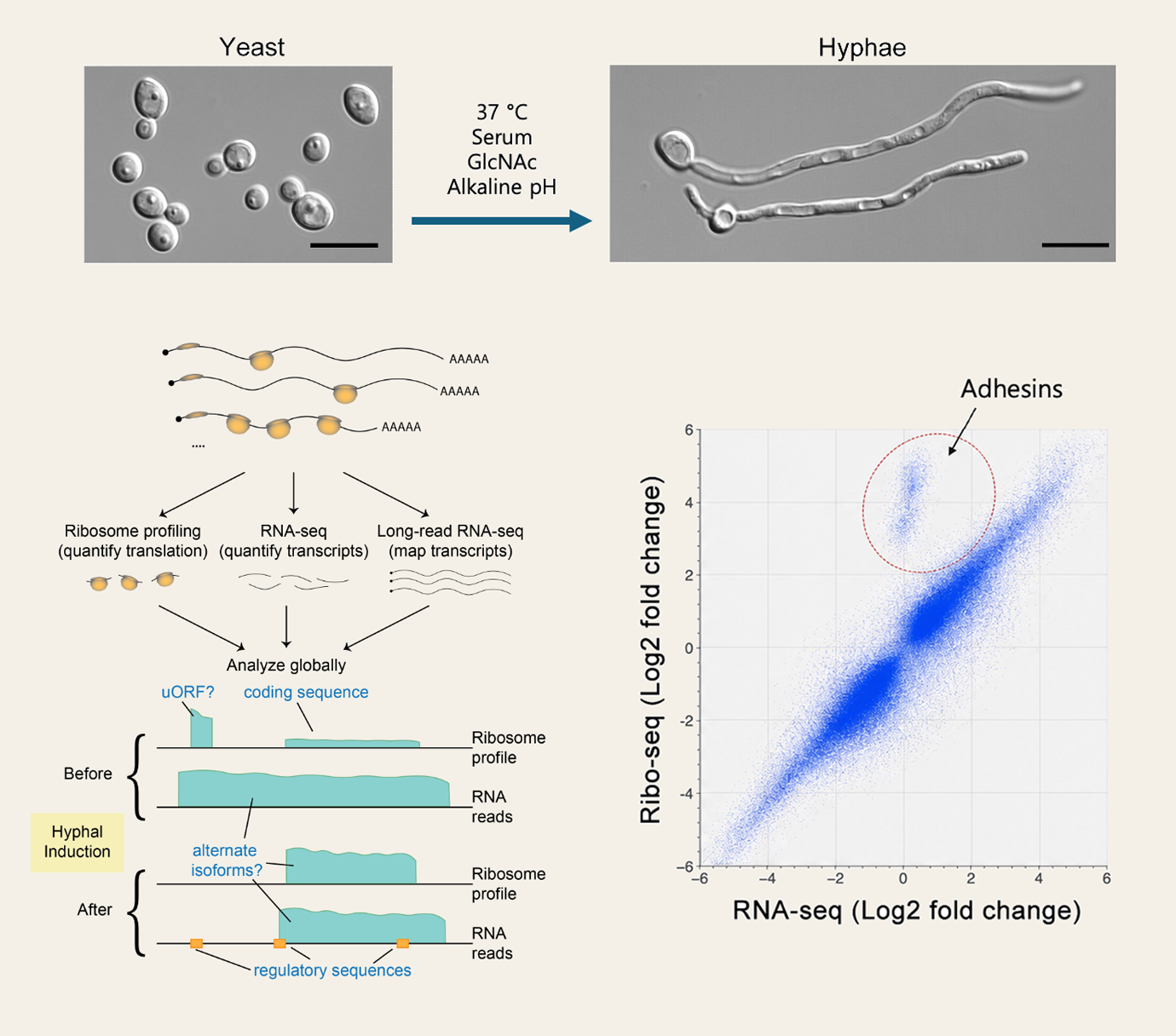
칸디다의 효모-균사 전환, uORF·대체 번역체 조절, RNA-seq과 Ribo-seq 변화량을 함께 보여주는 연구 결과 그림

02

식물 실시간 모니터링 나노센서

식물이 가뭄, 상처, 질병에 대응하며 방출하는 신호 물질을 실시간으로 감지하는 나노센서를 개발합니다. 스트레스를 조기에 발견해 작물 피해를 줄이고 자원을 효율적으로 사용하는 농업을 지향합니다.
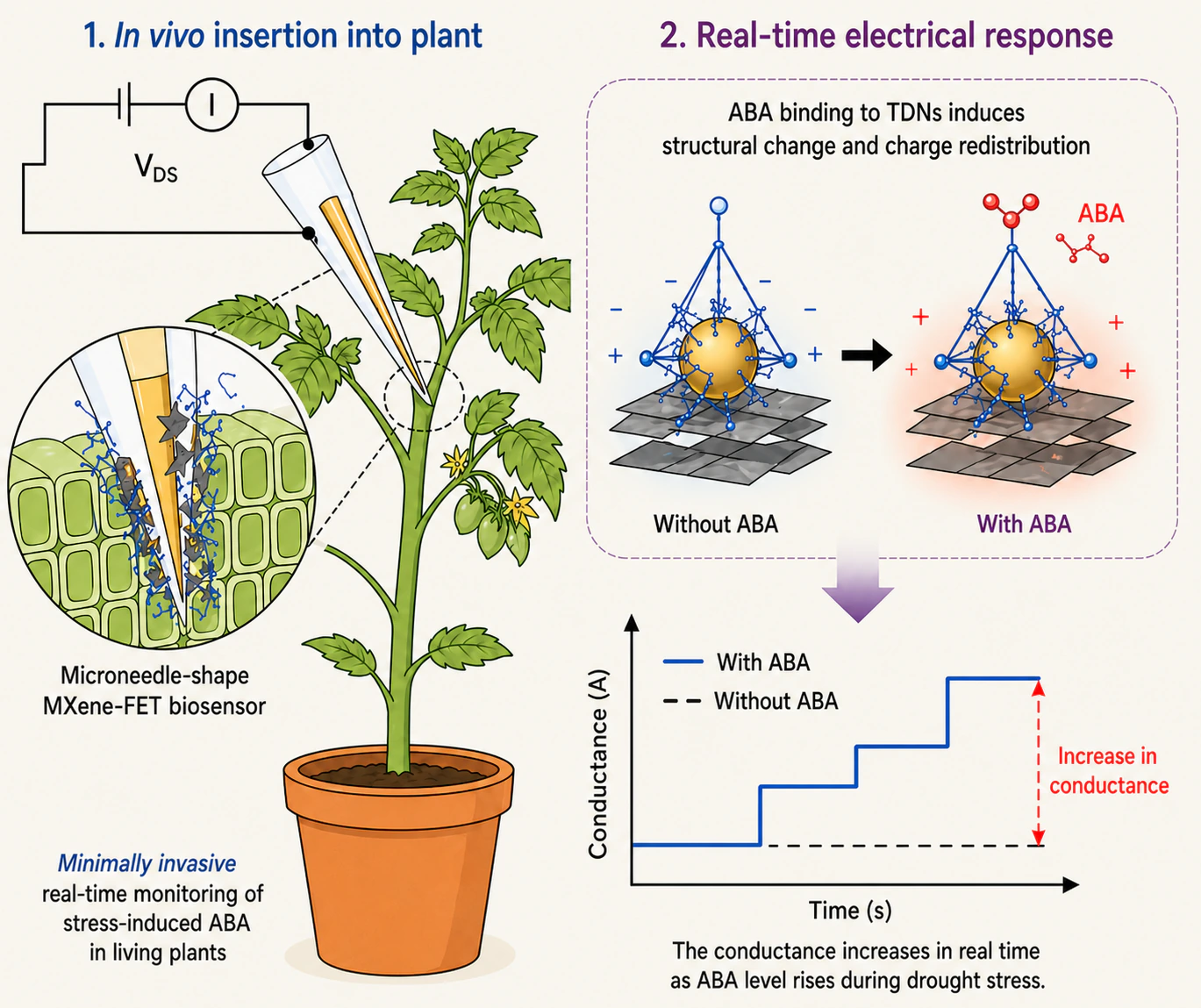
토마토 식물 조직에 삽입한 마이크로니들 MXene-FET 센서로 ABA에 따른 전도도 변화를 실시간 측정하는 상세 모식도

03

AI로 탐구하는 버섯 진화

계통유전체 정보, 형태 이미지, 생태 데이터를 인공지능과 결합해 버섯의 독성, 색, 형태와 같은 핵심 형질이 어떻게 등장하고 다양해졌는지 탐구합니다.
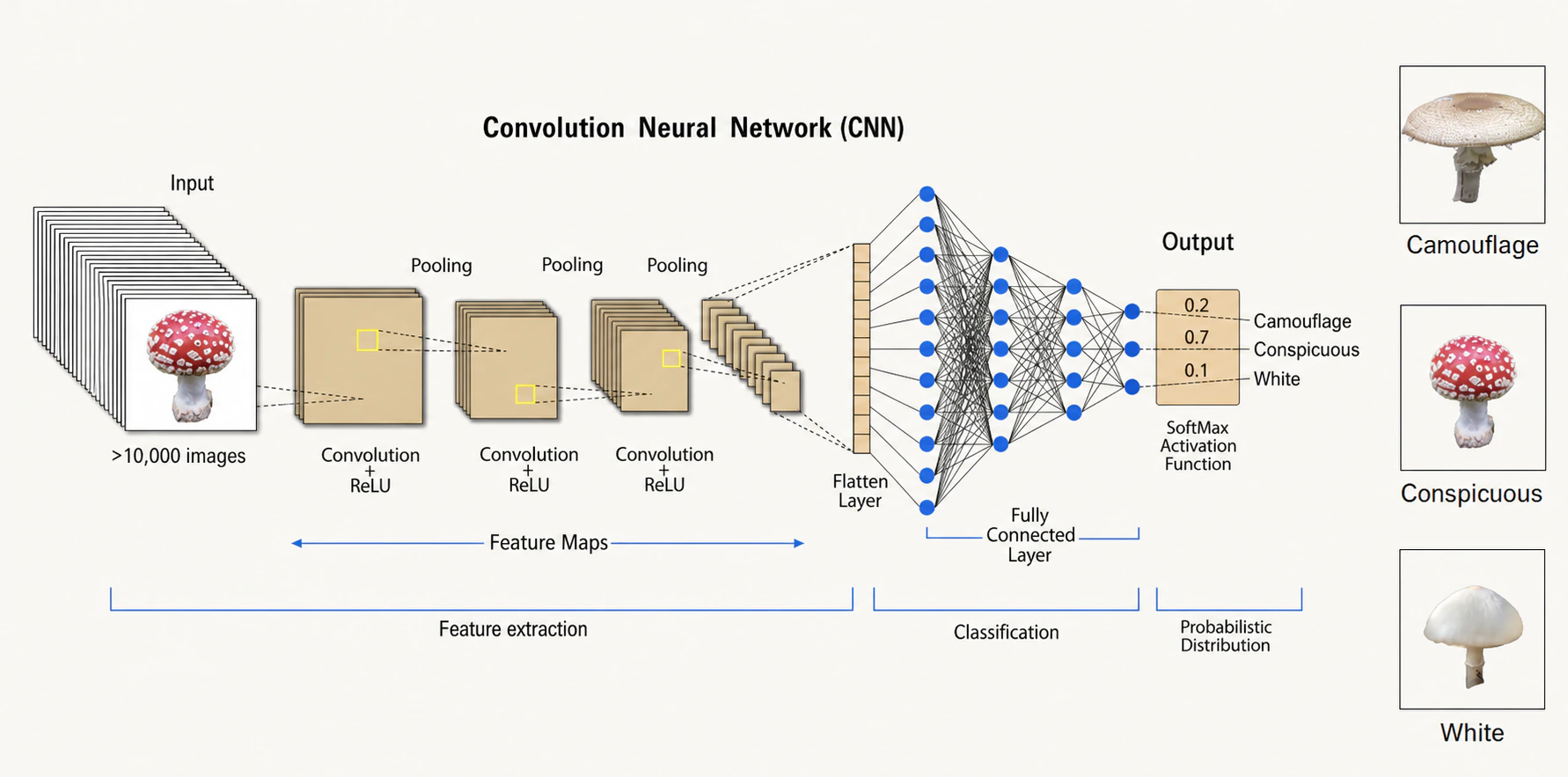
1만 장 이상의 버섯 이미지를 합성곱 신경망으로 분석해 위장색, 경고색, 흰색 형질을 분류하는 상세 모식도

People

구성원

Min Lab 연구책임자 민경훈 교수

연구책임자 · Principal Investigator

민경훈 Kyunghun Min, Ph.D.

부경대학교 미생물학과 조교수

경력 및 교육

  • 2025–조교수부경대학교 미생물학과
  • 2024–2025조교수강릉원주대학교 식물생명과학과
  • 2022–2024책임연구원서울대학교 농생명공학부
  • 2016–2022연구원미국 스토니브룩대학교 르네상스 의과대학
  • 2016방문연구원미국 카네기멜런대학교 생명과학과
  • 2014–2016박사후연구원미국 텍사스 A&M대학교 식물병리·미생물학과
  • 2008–2014박사서울대학교 농생명공학
  • 2005–2008학사서울대학교 응용생명화학부

Graduate Students대학원생

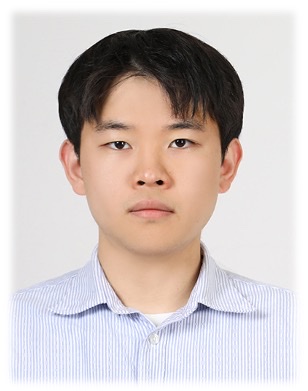
  • 장성원 학생 사진

    장성원 Seongwon Jang

    부경대학교 미생물학과 석사과정

  • 김주빈 학생 사진

    김주빈 Jubin Kim

    부경대학교 미생물학과 석사과정

Inside the Lab
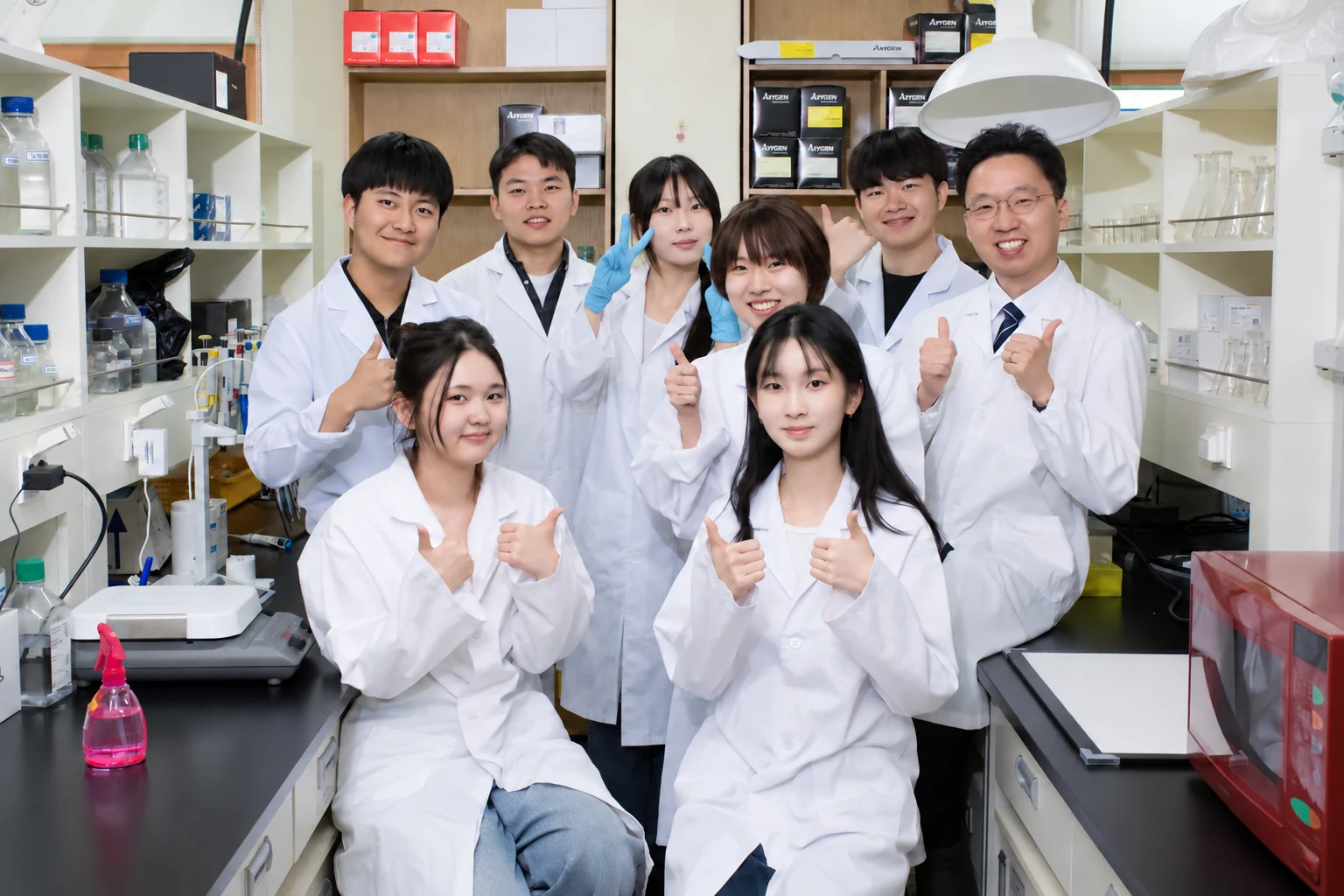
실험실에서 흰 가운을 입고 엄지를 들어 보이는 Min Lab 구성원 단체 사진
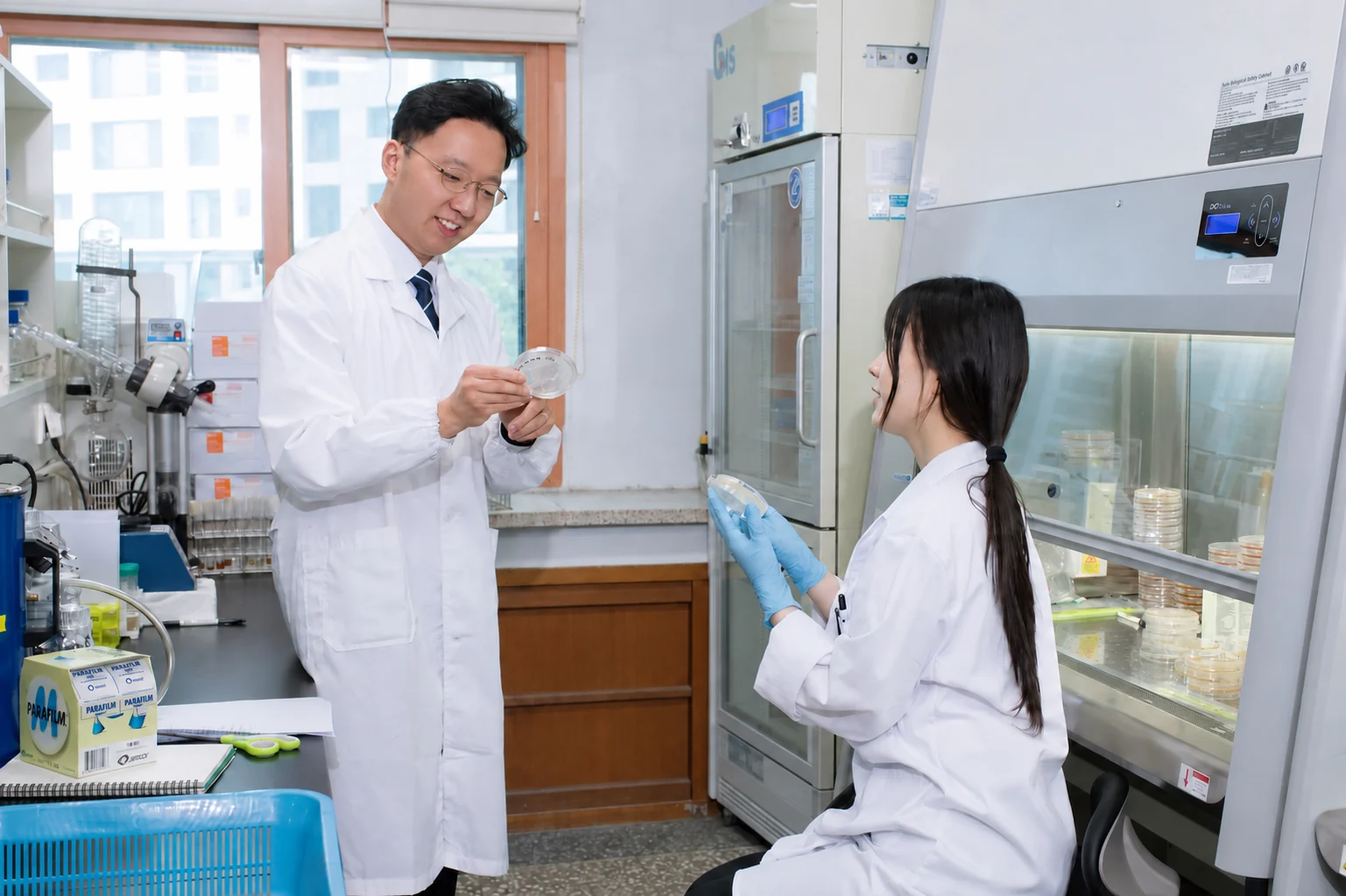
배양 접시를 든 연구자와 생물안전작업대에서 실험하는 연구자
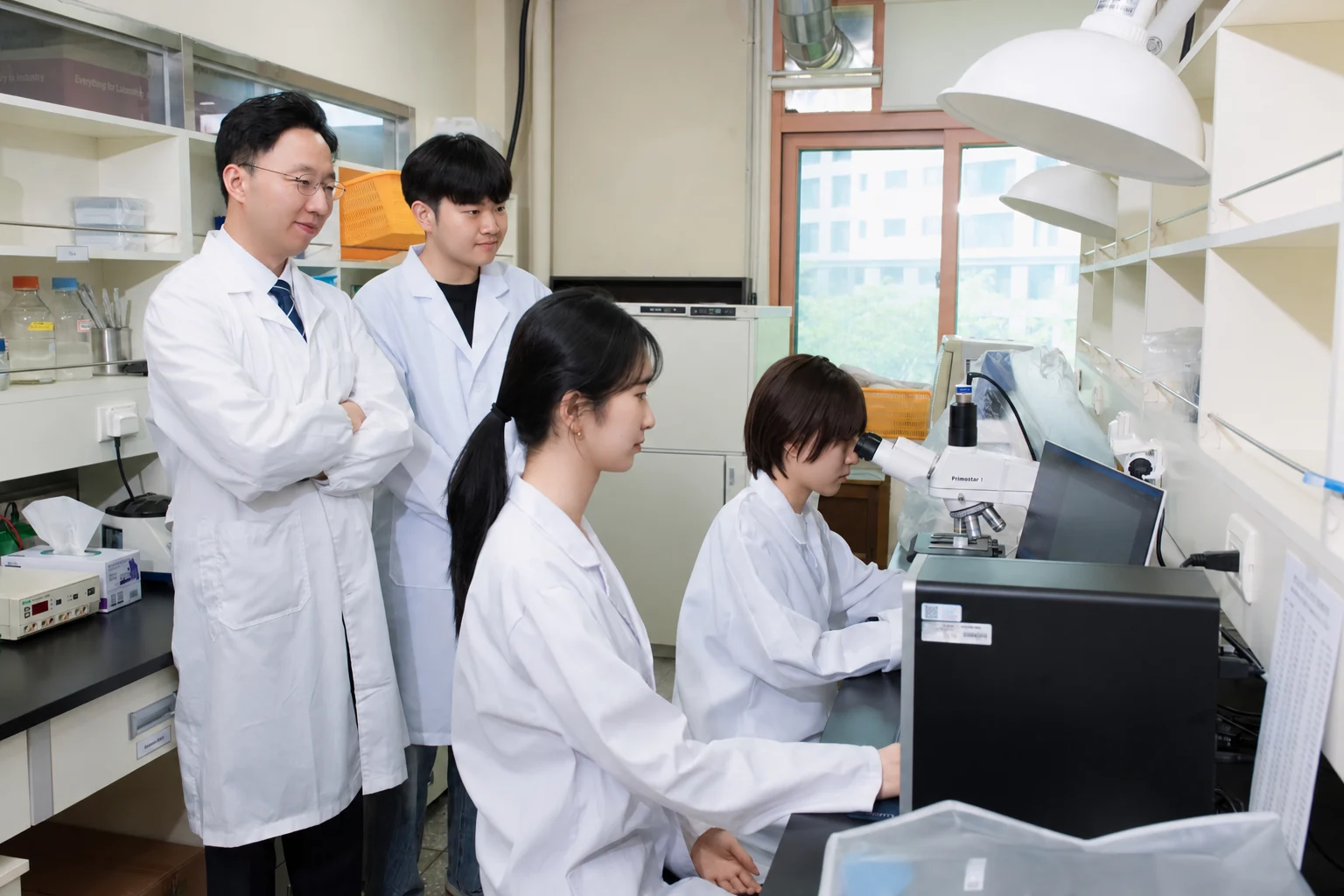
모니터 앞에 모여 관찰 결과를 함께 확인하는 Min Lab 연구진

Min Lab, 2026

Publications · 최근 10년 연구 논문

논문

22* 공동 제1저자 · † 공동 교신저자

2026

  1. S Bang, D Choi, S Park, S-E Lee, K Min†, S Hong†. In Vivo real-time monitoring of drought stress responses in plants using microneedle field-effect transistor biosensor. Sensors and Actuators B: Chemical. 451: 139412.

2025

  1. K Min, A Park. Shape-shifting mechanisms: Integrative multi-omics insights into Candida albicans morphogenesis. Mycobiology. 53(2): 250–257.

2024

  1. KA Swenson, K Min, JB Konopka. Candida albicans pathways that protect against organic peroxides and lipid peroxidation. PLoS Genetics. 20(10): e1011455.
  2. J Park, H Jeon, A Hwangbo, K Min, J Ko, J-E Kim, S Kim, JY Shin, Y-H Lee, Y-W Lee, H Son. A winged-helix DNA-binding protein is essential for self-fertility during sexual development of the homothallic fungus Fusarium graminearum. mSphere. 9(9): e0051124.
  3. H Moon*, K Min*, J Winarto, S Shin, H Jeon, DG Song†, H Son†. Proteomic analysis of cell wall proteins with various linkages in Fusarium graminearum. Journal of Agricultural and Food Chemistry. 72(11): 6028–6039.
  4. H Jeon*, JW Yang*, D Shin, D Min, BJ Kim, K Min†, H Son†. Development of a selective medium for surveillance of Fusarium head blight disease. The Plant Pathology Journal. DOI: 10.5423/PPJ.OA.12.2023.0173.

2023

  1. S Shin, H Jeon, S Kim, HJ Noh, JW Jo, K Min†, H Son†. Two previously unrecorded fungal species isolated from Muui island in Korea. Mycobiology. 51(6): 410–416.
  2. LM Douglas, K Min, JB Konopka. Candida albicans resistance to hypochlorous acid. mBio. e02671-23.
  3. S Kim, R Lee, H Jeon, N Lee, J Park, H Moon, J Shin, K Min, J-E Kim, J-W Yang, H Son. Identification of essential genes for the establishment of spray-induced gene silencing-based disease control in Fusarium graminearum. Journal of Agricultural and Food Chemistry. 71(49): 19302–19311.
  4. H Jeon, H Son†, K Min†. Detailed protocol to perform direct PCR using filamentous fungal biomass—tips and considerations. Bio-protocol. 13(21): e4889.
  5. J Park, H-H Lee, H Moon, N Lee, S Kim, J-E Kim, Y Lee, K Min, H Kim, GJ Choi, Y-W Lee, Y-S Seo, H Son. A combined transcriptomic and physiological approach to understanding the adaptive mechanisms to cope with oxidative stress in Fusarium graminearum. Microbiology Spectrum. e01485-23.
  6. S Choi, J-W Yang, J-E Kim, H Jeon, S Shin, D Wui, LS Kim, BJ Kim, H Son†, K Min†. Infectivity and stress tolerance traits affect community assembly of plant pathogenic fungi. Frontiers in Microbiology. 14:1234724.
  7. WK Son, YS Choi, YW Han, DU Shin, K Min, J Shin, MJ Lee, H Son, DH Jeong, SY Kwak. In vivo surface-enhanced Raman scattering nanosensor for the real-time plant monitoring of multiple stress-signaling molecules. Nature Nanotechnology. 18:205–216.
  8. H Jeon, J-E Kim, J-W Yang, H Son†, K Min†. Application of direct PCR for phylogenetic analysis of Fusarium fujikuroi species complex isolated from rice seeds. Frontiers in Plant Science. 13:1093688.

2022

  1. N Lee, J Park, JE Kim, JY Shin, K Min, H Son. Genome editing using preassembled CRISPR-Cas9 ribonucleoprotein complexes in Fusarium graminearum. PLoS ONE. 17(6): e0268855.

2021

  1. K Min, TF Jannace, H Si, KR Veeramah, JD Haley, JB Konopka. Integrative multi-omics profiling reveals cAMP-independent mechanisms regulating hyphal morphogenesis in Candida albicans. PLoS Pathogens. 17(8): e1009861.
  2. LD Bemena, K Min, JB Konopka, AM Neiman. A conserved machinery underlies the synthesis of a chitosan layer in the Candida chlamydospore cell wall. mSphere. 6(2): e00080-21.

2020

  1. K Min, AM Neiman, JB Konopka. Fungal pathogens: Shape-shifting invaders. Trends in Microbiology. 28(11): 922–933.

2019

  1. K Min, S Naseem, JB Konopka. N-acetylglucosamine regulates morphogenesis and virulence pathways in fungi. Journal of Fungi. 6(1):8.

2018

  1. K Min, A Biermann, DA Hogan, JB Konopka. Genetic analysis of NDT80 family transcription factors in Candida albicans using new CRISPR-Cas9 approaches. mSphere. 3(6): e00545-18.

2017

  1. S Naseem*, K Min*, D Spitzer, J Gardin, JB Konopka. Regulation of hyphal growth and N-acetylglucosamine catabolism by two transcription factors in Candida albicans. Genetics. 206(1): 299–314.

2016

  1. K Min, Y Ichikawa, CA Woolford, AP Mitchell. Candida albicans gene deletion with a transient CRISPR-Cas9 system. mSphere. 1(3): e00130-16.

특허

  1. 방선우, 홍승훈, 민경훈. 2025. 식물 유래 표적 신호물질의 실시간 생체내 모니터링을 위한 마이크로니들-트랜지스터 나노센서 및 그 제조 방법. 대한민국 특허 출원 제10-2025-0196871호 (출원)
  2. Y-W Lee, AR Park, K Min, and H Son. 2012. Gibberella zeae with a deletion of FgFlbA gene and method for overproduction of mycotoxin using thereof. Korea. Patent No. 10-2012-0152584.
  3. Y-W Lee, AR Park, K Min, and H Son. 2012. A mutant substituted on GzGpa2 gene and method for production of mycotoxin using thereof. Korea. Patent No. 10-2012-0152585.

Join

학생 모집

병원성 진균과 생명공학에 관심 있는 학생은 이메일로 문의해 주세요.

▶  소개 영상이메일 문의

Contact

연락처

연구 협력, 학생 지원, Min Lab에 관한 문의는 이메일로 연락해 주세요.

찾아오는 길

부경대학교 대연캠퍼스
우)48513 부산광역시 남구 용소로 45
45, Yongso-ro, Nam-gu, Busan 48513, South Korea
  • 연구실자연과학2관(C24) 7417호Min Lab · 시스템생물학 연구실
  • 교수 연구실자연과학2관(C24) 7404호Kyunghun Min, Ph.D. · 민경훈
지도에서 보기 ↗